
Archives for June 2019

Measles as The New “Normal”

Steven J. Goldstein, MD, FAAP

Steven J. Goldstein, MD, FAAP

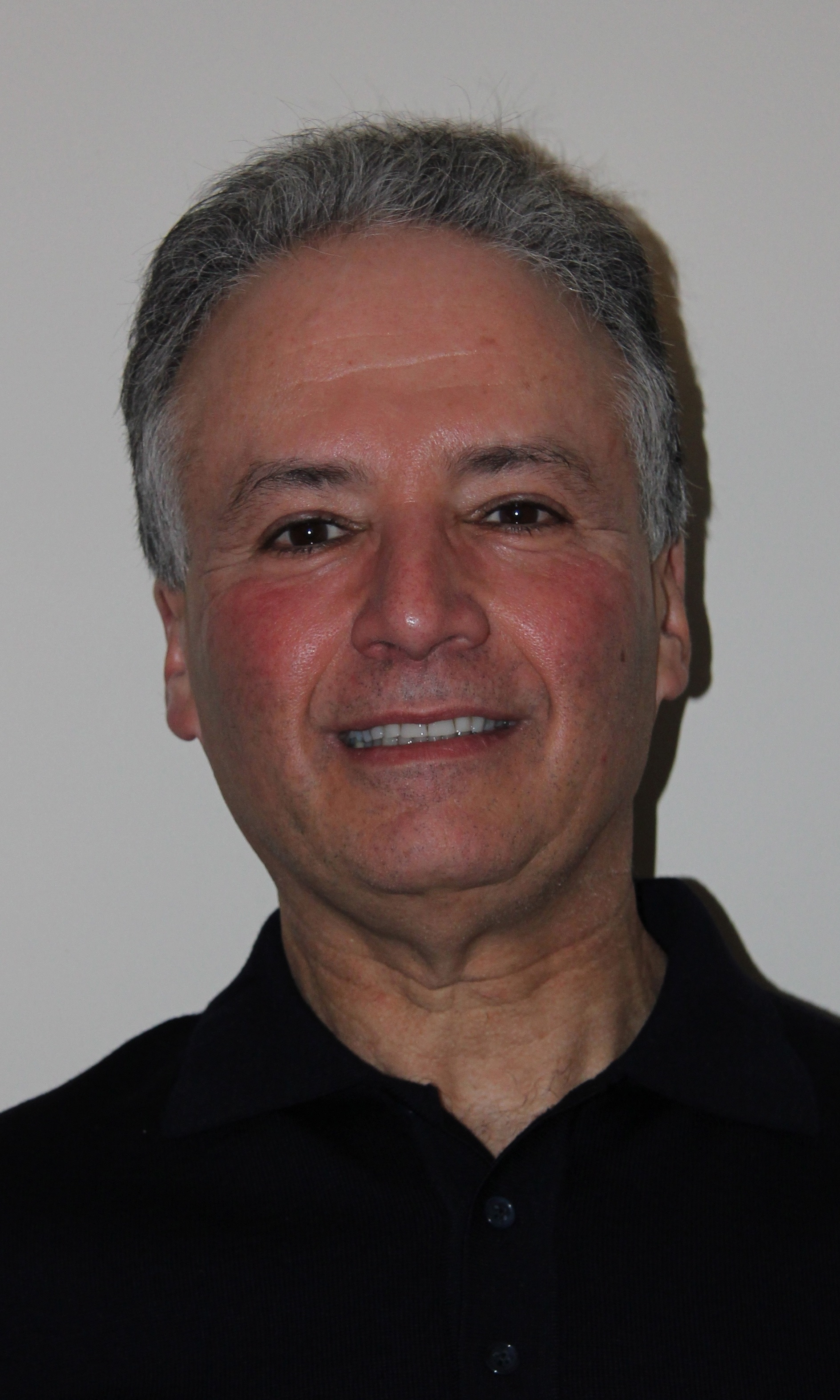
Dr. Steven J. Goldstein, MD, FAAP is a pediatrician in Brooklyn and Queens. He is president of the NYS AAP Chapter and serves as co-chair of its Pediatric Council and Committee on Environmental Health.

With cases of measles appearing in 23 states and counting and well over 800 cases nationwide, Americans will have to adjust to life with possible exposure to measles as the new “normal”.   This is after measles was declared eliminated from the United States in the year 2000.

People of my generation dreaded getting the measles when we were children in the 1950s, but it was a rite of passage in that pre-vaccine era along with the other childhood diseases of mumps, rubella, and chickenpox.  The worst of those illnesses, however, was measles, which can lead to pneumonia and brain infections, and the residual effects of which include immune suppression which in turn leads to a greater likelihood of illness for two to three years after the illness.  And on top of that, children who have measles under the age of two years are at increased risk for subacute sclerosing panencephalitis (SSPE), a rare complication from the virus that is fatal and begins on average six to ten years after the acute illness.  One to two deaths per thousand cases occur in those afflicted by measles.

What is different today is the greatly increased number of immunosuppressed patients living in the community.  In the fifties, patients on chemotherapy in the community were rare and immunomodulator drugs used for a wide variety of chronic diseases but which suppress the immune system did not exist.  Babies have always been at risk, as the vaccine is not usually given until one year of age.  An extra dose of vaccine can be given starting at age 6 months for exposures or travel.

But what about travel by air, or train, or bus, even within the United States, with a young child, a cancer patient, or someone on immune-suppressing drugs?  Measles is extremely contagious and hard to diagnose in the four days before the rash appears, which leads to unintended exposure in schools, places of worship, airports, and even malls.  The virus persists in the environment for up to two hours after an infected individual leaves the area.  This is just another aspect of the measles issue and has the potential to change the way we live day-to-day.

Measles made its way to the Detroit area after a visitor from Brooklyn brought the unintended guest along for the visit.  And now, after a month or so without an active case, there is once again measles in the Detroit suburbs.  Mothers of young babies in affected communities are essentially being held hostage in their homes because they are afraid to expose their children to the illness.  My daughter will drive to New York to visit with her young baby rather than risk an exposure on the short flight from Detroit.

And that brings me to what we can do to deal with this problem.  Those of us in pediatric offices, hospitals, emergency departments, and urgent care clinics are dealing with this issue every day as we must decide whether a patient that needs to be seen could spread measles to others in our health care facilities.  The bottom line is that immunization with two doses of measles vaccine gives 97% of people immunity, whereas those who have opted out of vaccination due to fear, distrust, or for whatever reason, remain at risk of contracting and spreading disease.  Those with medical reasons not to get vaccine may be at higher risk of complications and need to be protected by others having immunity (this is known as herd or community immunity) so as not to allow the illness to spread.

No major religion-in fact, no religion at all known to me-prohibits immunization, and some actively promote preventative actions.  Currently, New York State grants exemptions for school entry solely for medical and religious reasons.  There is a bill in the NYS Assembly Health Committee (A02371/S2994) that would allow for only medical exemptions to immunization in the state.  The pediatricians of New York State strongly support that bill and do not feel that it impinges on anyone’s civil rights: the law would not require vaccination, only prevent unvaccinated children from putting the other children at risk.

The anti-vaccine movement sees their issue as one of personal freedom.  I see that, but society also has the right to protect itself.  I’m fine with people having the freedom not to vaccinate against their will, but not at all fine with unvaccinated children putting others at risk.  No one should have the right to spread disease to others and impede their freedom to attend school, camp, or day care, or to go shopping or to travel.

Call your NYS Assemblyman and demand that Assembly Bill 02371 to repeal religious exemptions be released from committee for open debate.
Believe The Science That Vaccinations Protect Children

Eve Meltzer-Krief MD, FAAP

Eve Meltzer-Krief MD, FAAP

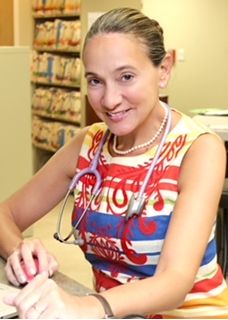
Dr. Eve Meltzer-Krief MD, FAAP is a pediatrician in Huntington and member of the NYS AAP Chapter 2 Immigration and Legislative Advocacy Committees.  This op-ed was published ontimesunion.com on May 23, 2019.

 Vaccination has been the most important and impactful scientific achievement of modern times. Yet because of misinformation fueled by social media, there remain pockets of unvaccinated children whose parents hide behind a cloak of religious exemption as protection from unfounded fears.

There are, in fact, no major religions that prohibit vaccination.  Sadly, these parents have put not only their own children at risk but the communities in which their children live, play and attend school.  The current measles outbreak is evidence of what happens when children go unvaccinated.

Measles is a highly contagious virus.  The current outbreak has now infected at least 880 people in 24 states.  Measles can lead to pneumonia, a brain infection called encephalitis, deafness, a prolonged immunocompromised state, and a rare complication called subacute sclerosingpanencephalitis that can occur years after infection and is fatal.

In 1962, the year before the measles vaccine was available, 3 million to 4 million people were diagnosed with measles, 48,000 were admitted to hospitals and 500 died.  By the year 2000, measles had been eliminated from the United States because of the vaccine.

However, because of growing numbers of parents choosing not to vaccinate their children, we have begun to see increased outbreaks in recent years, with this year’s being the largest since the disease was eliminated nearly 20 years ago.  There are currently 285 schools that are underimmunized in New York that are vulnerable to outbreaks.  As the rate of individuals claiming religious exemptions continues to rise this number will only grow.  Particularly susceptible to serious illness in these outbreaks are infants who have not yet been vaccinated, and immunocompromised children and adults who are receiving or have recently received chemotherapy and other immunosuppressives to treat cancer and chronic diseases.

Vaccines save lives.  The HIB vaccine has virtually eliminated disease caused by HaemophilusInfluenzae B, which before the vaccine’s introduction in the 1980s and 1990s affected 25,000 children yearly, causing meningitis, paralysis, blindness, pneumonia and a severe life-threatening respiratory illness called epiglottis.  Since the introduction of the Prevnar vaccine in 2000 there has been a dramatic decline in rates of meningitis, blood infections and other invasive life threatening disease caused by pneumococcal bacteria.

Vaccines are scientifically proven to be safe and effective and have saved tens of millions of lives over the past several decades.  Parents today are lucky to live in a time when we do not have to live in fear of our children contracting serious and deadly diseases.  However, the current outbreak has demonstrated that if parents fall prey to misinformation and fail to properly vaccinate their children, they put their own children at risk as well as the most vulnerable among us.

The American Academy of Pediatrics, representing 67,000 pediatricians across the country, is advocating for an end to state laws that allow people to refuse vaccination based on anything other than medical exemptions.  I urge New York legislators to pass S2994 and A2371.  I implore them to believe science and to protect children and at-risk residents in our state.  I implore parents and community members who understand the importance of vaccination to ask their state legislators to support the bill.

It is always tragic when children die or develop devastating long-term consequences from disease.  The most tragic of those cases, though, are the ones that are entirely preventable. Let us not fail our children.  Let us not fail those among us who are immunocompromised, who are too young to get vaccinated or who are undergoing treatment that prevents them from getting vaccinated.  These individuals, parents and children live in fear during outbreaks such as we are experiencing now. Let us not deny them the protection they need and are entitled to.


June 2019

Steven J. Goldstein, MD, FAAP

Steven J. Goldstein, MD, FAAP

Dear NYS AAP – Chapter 2 Member,

Thank you all for the honor and opportunity to serve the Chapter as President these past two years. Working for the Chapter has reinforced my sense that pediatricians have the power to create conversations and advocate in a way that will affect this and future generations in a profoundly positive way. I urge all of you to get involved and contribute to this vital dialogue.
Please see below for valuable resources, upcoming events, and updates on our Chapter’s activities.

Steven J. Goldstein, MD, FAAP
President, NYS AAP – Chapter 2
SJG34@Cornell.edu


Call for Participants: HPV Quality Improvement Project

The New York State American Academy of Pediatrics (NYS AAP) – Chapters 2 and 3 have been awarded an HPV Quality Improvement grant to improve HPV vaccination rates in practices.
We are currently seeking practices to participate in a 6-month HPV series completion project for patients aged 11.00 – 17.99 years old.  Physicians will receive MOC part IV credit for their participation.  NO prior Quality Improvement experience is required, and we do everything we can to make the project seamless and easy to complete!
What is involved:
  • Identify a physician champion from your practice who will:
  • Attend one face-to-face Plan-Do-Study-Act and Quality Improvement training
  • Oversee monthly physician/staff meetings to identify, implement, and evaluate specific interventions to increase series completion rates
  • Call into two 30-minute calls, at the midpoint and end of the project, to review progress, share successes and challenges with other practices
  • Coordinate MOC completion forms for all participating physicians in practice
  • Identify someone in your practice who will:
  • Review 20 charts of 11.00-17.99 old patients per month
  • Enter high level data into the AAP’s Quality Improvement Data Aggregator (QIDA) each month (~10 quick questions/chart)
If you are interested in participating, please submit your information via the link below no later than Friday, June 21st.
If you have any questions, please contact:
Sheila Palevsky, MD, MPH, FAAP
212-865-0216


May 2019 Events: CME Dinner Program & Networking Event

May was a successful month for Chapter 2 with two outstanding events:
On May 9th, Dr. Andy Garner, co-author (with Dr. Robert Saul) of “Thinking Developmentally: Nurturing Wellness in Childhood to Promote Lifelong Health,” spoke at a dinner meeting at NYU Winthrop about how the basis for adult disease can begin with toxic stress and adversity in childhood.  A panel of experts with various backgrounds in child development commented and answered questions.  Andy’s book is well worth reading, containing much that can be incorporated into pediatric practice.  It’s available in the AAP Bookstore.
For those interested in learning even more about this topic, Dr. Kimberly Noble, a Board Member at Docs For Tots, recently gave a TED Talk: “How Does Income Affect Childhood Brain Development?”  Her work was also featured in articles in The Wall Street Journal and The Economist.
On May 22nd, Chapters 2 and 3 hosted “Pediatrics on the Rooftop: A Networking Event” at the Tillary Hotel.  Don’t despair if you couldn’t make it down to Brooklyn to hear from leadership about opportunities and initiatives, as future events will be scheduled at other venues in the Chapters’ geographic area.


Advocate to Move the Medical Exemptions Only to Vaccination Bill from the Assembly Health Committee to Open Debate

Those of you that have seen the emails from the Chapter and the NYS AAP requesting help with this issue know that, as I write this, the bill is still stuck in Committee.
This bill would eliminate all exemptions to vaccination in New York State with the exception of medical.  Unimmunized individuals would be excluded from schools, licensed day care and camps in an attempt to protect those unable to be immunized.  The push to get this bill out of committee has energized the anti-vaccine community and they are calling NY State legislators from all over the country.  Calls in favor are largely coming from NY State.
Your help is urgently needed if we are to join California, Mississippi, West Virginia and the other states that are working to protect their most vulnerable.
It will only take a few minutes of your time to make a difference.


The Return of Measles: What We are Reading, Writing, and Watching

The return of measles has the potential to disrupt healthcare and society. Here are some very relevant recent editorials and publications (some by or including Chapter members) related to measles and vaccination:
10 Measles Facts to Share With Parents
Contemporary Pediatrics, May 2019
What Is Your Protocol to Stop Measles Before Kids in Your Office Get Exposed?
Infecting People Isn’t a Religious Right
NY Times Editorial Board. Published on May 21
Commentary: Believe the science that vaccinations protect children
by Eve Krief. Published in the Albany Times-Union on May 19
AAP Voices Blog: The Return of Measles to a Neighborhood Near Yours
by Steve Goldstein. Published by the AAP on April 30
Measles: Coming Soon to Your Practice
MedPage Today. Published May 16
How to Respond to Anti-Vaxxers
Published May 1 on ScienceBasedMedicine.org
The Centers for Disease Control Wants to Hear From You
The CDC is interested in meeting the needs of pediatricians regarding measles and other vaccine issues. If you have questions or thoughts about how they can help you, please send an email to me at SJG34@Cornell.edu.


Provider Survey on Knowledge, Attitudes, & Behaviors Regarding Sexual Health & Reproductive Care for Adolescent Patients

The NYS AAP – Chapter 2 Committee on Youth and Adolescence is interested in learning more about pediatric providers’ knowledge, attitudes, and practices regarding the sexual and reproductive health care of adolescents.
We are conducting a brief survey as part of a research study to obtain more information on this important topic.  Your participation would be greatly appreciated, as it will help us learn more about the sexual and reproductive health care being provided to adolescents in our community.
Your participation in the survey is completely voluntary.  It is also an anonymous and confidential survey.  The survey should take approximately 10-15 minutes to complete.  Research participation consent is implied by completion of the survey.
Please click on the link below to access the survey:


Threats to Environmental Health and Migrant Families

How a New White House Memo Could Undermine Science in U.S. Policy
The Trump administration’s move, similar to EPA’s ‘secret science’ effort, offers new ways for fossil fuel and other industries to challenge science-based policies.
Published Apr 25, 2019 on InsideClimateNews.org
Trump Administration Separates Some Migrant Mothers From Their Newborns Before Returning Them to Detention
Published on Rewire.news on May 28


Educational Resources for Pediatricians:  Webinars, In-Person Events, Guide & Toolkit

Immunization Information Technology:
A Guide for Pediatricians on Immunization Information Systems and Two-Dimensional Barcoding
Pediatric Antibiotic Stewardship Toolkit
Webinar on Electronic Cigarettes
Below is a link to the recording of a recent American Thoracic Society webinar on electronic cigarettes, from a toxicologist and mother’s perspective, featuring Ilona Jaspers, PhD, from the University of North Carolina.  She presents important and compelling information.
AAP Live Webinar:
Duchenne Muscular Dystrophy: Respiratory and Cardiac Care
Date/Time: June 11, 1:00 – 2:00 pm
NYSDOH Commissioner’s Medical Grand Rounds: Vaccine Hesitancy: An Evolving Public Health Threat
Attend in-person or via the live webinar
Date/Time: June 13, 9:00 – 11:00 am
Annenberg Building, Room 13-01
Icahn School of Medicine at Mount Sinai
1468 Madison Avenue, New York, NY 10029
NYSDOH Early Hearing Detection and Intervention Recorded Webinar:  The Role of the Medical Home Provider in Newborn Hearing Screening
Presenters from the NYSDOH Early Hearing Detection and Intervention (NYEHDI) program discuss the role of the medical home provider in the newborn hearing screening program. Link to Recorded Webinar
Save the Date: 18th Annual Regional Perinatal Public Health Conference
Resilience – Supporting Individuals, Families and Communities to Improve Health Across the Lifecourse
Date/Time: Nov. 13, 8:30 am – 4:00 pm
DoubleTree Hotel, Tarrytown, NY


Awards & Honors

Award of Chapter Excellence
We are pleased to announce that the Chapter has received the AAP Award of Chapter Excellence in the Large Chapter Category for the second year running.
2019 Special Achievement Award Winners
Special Achievement Awards recognize outstanding AAP work of individuals or chapter achievements. Congratulations to our well-deserving winners.
  • Eve Meltzer-Krief, MD, FAAP, for her commitment to and effective advocacy on multiple issues that affect the health and well-being of children and families.
  • Juan Kupferman, MD, MPH, FAAP, for his ongoing efforts to promote chapter membership and involvement and for fostering inclusion and diversity as we move forward.
  • Jeffrey Oestreicher, MD, FAAP, for his ongoing work and commitment to change the local and national conversation about gun violence and bring science into the equation.


Calling All Early Career Physicians! (ECPs are physicians < 10 years out from final post-graduate training)

Your Chapter needs YOU to serve as our ECP Representative to the Chapter executive board.  Looking for talented, passionate, ECPs who want to have a voice in their local Chapter.  This is a great introduction to local leadership.  Take YOUR seat at the table and represent local ECPs!
In addition to local activity, one chapter ECP rep will be chosen to represent District II at the Annual District Meeting at AAP Headquarters in Itasca Illinois July 25-28.  Ability to attend the District meeting is not a requirement of chapter representative.
Click here for the position description.  If you have any questions, please contact your ECP District Rep (Vanessa Salcedo, MD Vanessa.Salcedo.md@gmail.com) and Assistant District Rep (Lauren Jen, MD lauren.ciminello@gmail.com).
As time is short before the district meeting please complete the application linked below and return it to Vanessa and Lauren no later than June 10, 2019.


Chapter 2 Committee Openings

Our Committees are actively seeking your involvement and ideas!  There are openings and opportunities to make a difference in the following committees:

  • Disaster Preparedness
  • Environmental Health
  • Legislative
  • Membership and Diversity
  • Mentoring Committee (Mentors and Mentees wanted)
  • Parents (suggest a parent to work with us)
  • Pediatric Council
  • Prevention of Family Violence
  • Quality Improvement

View our full list of committees and contact information here.  Still don’t see your interest?  Talk to us about starting a new committee!


NATIONAL AAP NEWS – Presidential Elect Candidates

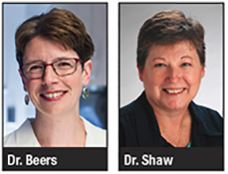
The National AAP National Nominating Committee has selected Dr. Lee Savio Beers of Washington, D.C., and Dr. Pamela K. Shaw of Kansas City, Kan., as candidates for AAP president-elect.

Additional information about the candidates, including profiles and position statements, will be published in upcoming issues of AAP News and online at www.aap.org/election.  Voting will begin September 7 and ends September 21, 2019.

Voting Chapter members should have received an email with a link to the Chapter election.  Please take a moment to vote and read the statements of the incoming Officers for July 1, 2019 – June 30, 2021.
The Chapter will be in good hands going forward.


We’ll help you pursue your passion within Pediatrics!

Send us an email describing your interest and we will connect you with the right people to get you involved.

Please contact me or our Executive Director, Jessica Geslani, at jgeslani@aap.org

Follow Chapter 2 on Twitter: @NYSAAPCh2

My best,
Steve Goldstein, Chapter President SJG34@Cornell.edu | Twitter: @SteveGoldstei10

and the Officers:
Shetal Shah, Vice President shetaldoc@hotmail.com | Twitter @NICUBatman
Robert Lee, Secretary rlee@aap.net
Sanjivan Patel, Treasurer sapatel@wyckoffhospital.org